
"climate for coffee"
20000 article(s) found

Kenyan Coffee touching Story of Kenyan Coffee the impact of Kenya's climate on coffee
Professional coffee knowledge exchange more coffee bean information please follow the coffee workshop (Wechat official account cafe_style) when you say "Kenya", you think of the African prairie and the animal migration, is there anything else? The coffee-loving editor immediately thought of mellow coffee. Kenya is the largest coffee-producing area in East Africa, and it is also a representative term for fine coffee. Even Starbucks sells Kenyaca.

Description of taste and flavor in climatic producing area of Coffee in Crystal Mountain, Cuba
Following Ka Pai (Wechat official account vdailycom) found that Beautiful Cafe opened a small shop of its own. When it comes to Cuba, people's first impressions are likely to be cigars. In addition, it is a socialist country like the people's Republic of China, and the only socialist country in the Americas. Cuba is an archipelago country in the northern Caribbean Sea of North America and the largest island in the Caribbean Sea.

Climate change threatens to reduce coffee production by 90% by 2050
Professional baristas follow Coffee Workshop (Wechat official account cafe_style) A study released on Monday shows that climate change will pose a serious threat to coffee in Latin America, which will produce 90 per cent less coffee by 2050 than it is today. Especially some high-quality coffee, such as Arabica coffee, this kind of coffee beans can not stand even temperature, humidity, day
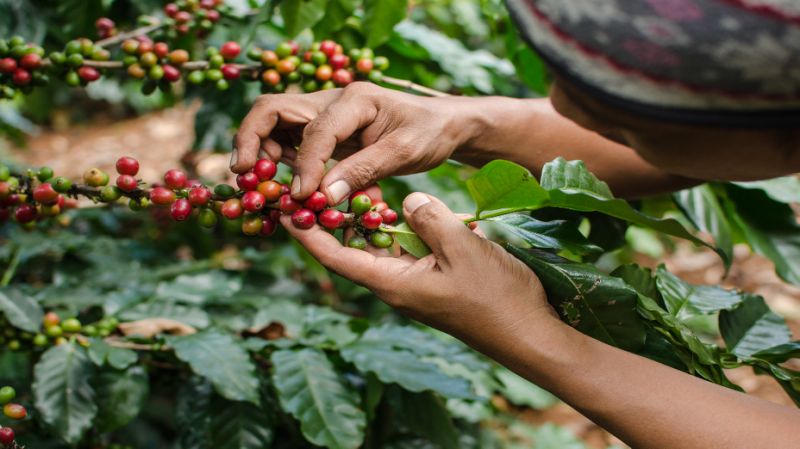
Climate change 60% of wild coffee beans may become extinct! Arabica is an endangered species!
Professional coffee knowledge exchange more coffee bean information Please follow the coffee workshop (official Wechat account cafe_style) many people regard coffee as spiritual food, and the world can drink 2 billion cups of coffee a day. However, researchers at the Royal Botanical Garden say 60% of the world's wild coffee varieties face the threat of climate change, the loss of deforestation habitats and the threat of diseases and pests.

Description of climate, topography, taste and flavor of Coffee in Crystal Mountain, Cuba
Following the comment (official Wechat account vdailycom) found that the Republic of Cuba [Cuba] is one of the few socialist countries in the world (China, North Korea, Cuba, Vietnam, Laos). Cuba is the first country in the Western Hemisphere to establish diplomatic relations with China, and it is the only socialist country in the Americas. Why is it subject to sanctions?

Costa Rican coffee industry reduced due to climate
Due to the decline in coffee prices on the international market, Costa Rican coffee exports totaled US $306 million in 2015, down 26% from US $412 million in 2012, Costa Rica reported on May 12. In the first quarter of 2016, the average world price of coffee was $1.14 per liter, down 26 per cent from the same period in 2014. Affected by climate change and diseases and insect pests at the same time, the coffee growing area of Colombia

Introduction to Coca Cauca Lazmus Manor, Columbia Coffee with mild Climate
The main varieties of Colombian coffee are small grains of coffee. Plants are small trees or large shrubs, 5-8 m tall, usually much branched at base; old branches gray-white, nodes dilated, young branches glabrous, compressed. Leaves thinly leathery, ovate-lanceolate or lanceolate, 6-14 cm long and 3.5-5 cm wide, tip long acuminate, acuminate part 10-15 mm long, base cuneate or slightly obtuse, rarely rounded, entire or

Ethiopian coffee climate
Following Cafe (Wechat official account vdailycom) found that Beautiful Cafe opened its own shop for Ethiopian Coffee Climate if you like coffee, there is one more reason to pay attention to climate change. Ethiopia, an important coffee producer, will be greatly affected if global warming is not contained, and at worst nearly 60% of the country's coffee-producing areas will be affected, according to a new study.

Introduction to Coffee Flavor and Taste characteristics of Santa Rita Manor in Colombia
The climatic conditions in Costa Rica are very different, completely subverting the classification of the four seasons of the year, there are only two seasons, the rainy season from April to December, and the dry season from the end of December to April of the following year, also known as summer. The annual average temperature in San Jose, the capital, ranges from 15 ℃ to 26 ℃, while the temperature in coastal areas is relatively high, with a night average temperature of 2 in the Caribbean.

What conditions do Rwandan coffee trees need to grow?
Rwanda throughout the multi-mountain and plateau, most of the region is a tropical plateau climate and savanna climate, mild and cool. With its natural conditions of high altitude and fertile volcanic soil, the country's fertile soil and favorable climate are conducive to plant growth. Rwanda is the only country in the world that can fully enjoy the harmony between soil, elevation and climate. In this unique

Higher requirements for Climate and Environment small Coffee was introduced and planted in Xizang
Zaxi Pingcuo, a villager of Shama Village, is one of the farmers who participated in the trial of coffee. He prepared the land, watered and weeded the coffee seedlings in strict accordance with the advice of experts. Coffee is a crop of high economic value, and it is hoped that the success of the trial will lead more and more farmers to become rich together, he said. In the future, we hope to gradually form a complete coffee industry through the promotion and cultivation of coffee.

Introduction to the fragrant Ecuadorian Coffee Flavor and the Fine Coffee in the Manor area
Ecuador is divided into the western coast, the central mountains, the eastern Amazon River basin and the four central regions of the Galapagos Islands, with diverse climatic conditions. The western coastal plain belongs to the tropical rain forest climate, with an average temperature of 23-25 ℃. The central Andes. The intermountain basin in this area belongs to the savanna climate, and the mountain belongs to the subtropical forest climate, with perennial snow above 4000 meters above sea level. Annual average decline

Coffee farms in Ethiopia may be relocated due to climate change
Professional baristas follow Coffee Workshop (Wechat official account cafe_style) A new study warns that climate change is having a huge impact on coffee farms in Ethiopia, forcing farmers to relocate their farms or lose their crops, foreign media reported. These troubles are caused by rising temperatures and reduced rainfall, resulting in a reduction in coffee cultivation. Decades later, 60% of Ethiopia

Introduction to the fragrant Ecuadorian Coffee Flavor and the Fine Coffee in the Manor area
Ecuador is divided into the western coast, the central mountains, the eastern Amazon River basin and the four central regions of the Galapagos Islands, with diverse climatic conditions. The western coastal plain belongs to the tropical rain forest climate, with an average temperature of 23-25 ℃. The central Andes. The intermountain basin in this area belongs to the savanna climate, and the mountain belongs to the subtropical forest climate, with perennial snow above 4000 meters above sea level. Annual average decline

What conditions do coffee trees need for planting? do they have high requirements on local climate?
The origin of the coffee tree is Ethiopia in Africa. In botany, coffee trees belong to the evergreen trees of the subgenus Rubiaceae, and coffee beans, commonly known as coffee beans, are the seeds of the fruit of coffee trees, just because they are shaped like beans, so they are called coffee beans. Climate is the decisive factor for coffee cultivation. Coffee trees are only suitable for growing in the tropics or subtropics, so latitude 25 is south and north.

Fruit aroma of Ecuadorian Coffee Manor flavor and taste characteristics of boutique coffee beans
Ecuador is divided into the western coast, the central mountains, the eastern Amazon River basin and the four central regions of the Galapagos Islands, with diverse climatic conditions. The western coastal plain belongs to the tropical rain forest climate, with an average temperature of 23-25 ℃. The central Andes. The intermountain basin in this area belongs to the savanna climate, and the mountain belongs to the subtropical forest climate, with perennial snow above 4000 meters above sea level. Annual average decline

Introduction to the Fine Coffee Bean Manor in Guatemala Coffee growing Environment
Guatemala is located in the tropics, the northern and eastern coastal plains have a tropical rain forest climate, the southern mountains have a subtropical climate, the year is divided into two dry and wet seasons, with the wet season from May to October and the dry season from November to April of the following year. The narrow and fertile flatlands on the Pacific side of Guatemala have a tropical climate. The central plateau is also the cultural center of Guatemala, where the year-round temperature ranges from 1300 to 1800 meters.

Climate change affects coffee production. 25 million coffee farmers' livelihoods are threatened.
A coffee farmer in the Mexican state of Chiapas recently talked about drastic climate change in an interview with Alicia Frank, a researcher at the University of California. In the past, there was usually only mild drizzle, but now there are frequent torrential rains, causing coffee trees to flood. These problems are by no means confined to Mexico. In South America, Asia and Africa, droughts and storms caused by global warming
Coffee crisis, mankind's favorite drink is about to go into history.
Droughts, floods, infectious diseases and climate changes have posed a great threat to human coffee addiction. Do we really have to face the days when there is no coffee? When we read the newspaper and pick up the latte or espresso on the table, climate change seems far away, but thousands of kilometers away, the origin of coffee beans is experiencing waves. Mersey.